Automotive runs the densest AMR fleets in manufacturing. Not because the robots are different, but because the problems are: takt time is fixed, the marketplace is a long way from the line, and every layout change ripples through a build schedule locked months ago.
At HESCO we help customers evaluate material handling automation alongside the rest of their Rockwell architecture. This walks through three workflows OTTO has published results for, with attention to the engineering behind each.
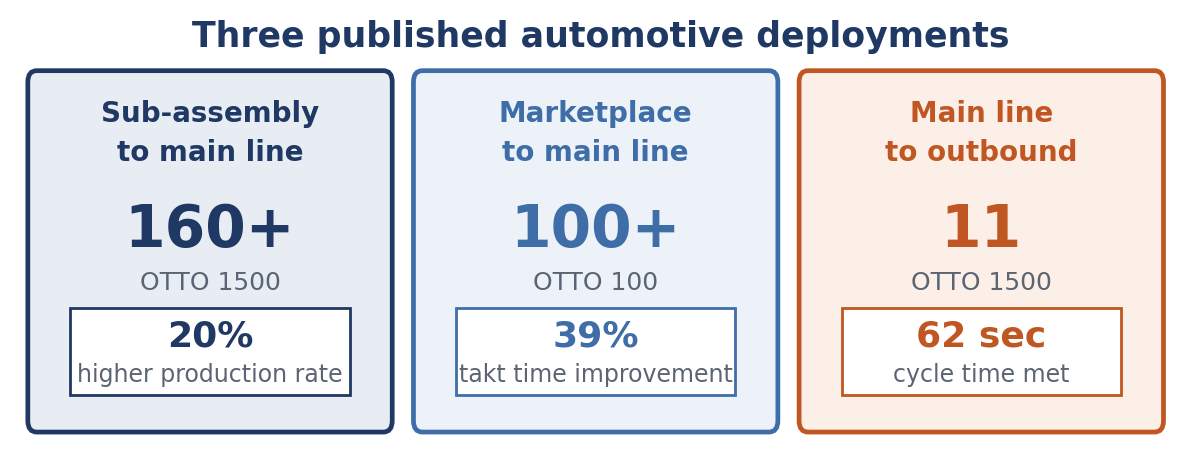
Sub-assembly to main line: replacing AGVs that couldn't scale
A Fortune 500 automotive OEM was running AGVs at its most profitable plant, and the constraint wasn't reliability — it was extensibility. Fixed magnetic paths bottlenecked production whenever something obstructed them, and the plant needed to support a new line 700 meters away. Reaching it meant miles of additional tape and roughly double the vehicle count.
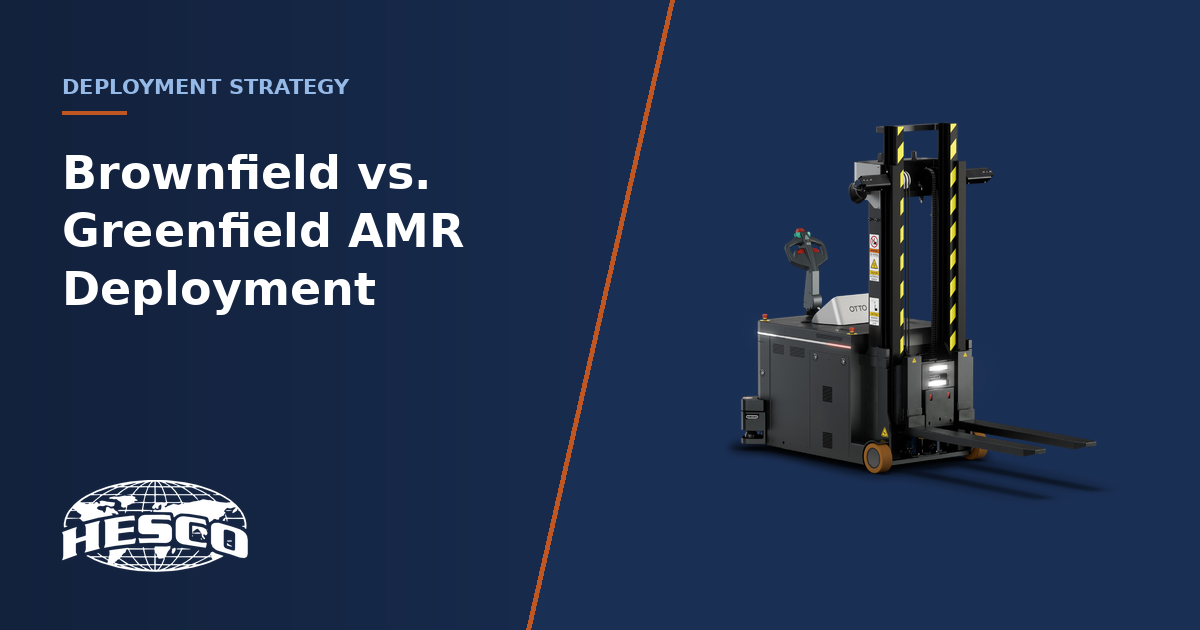
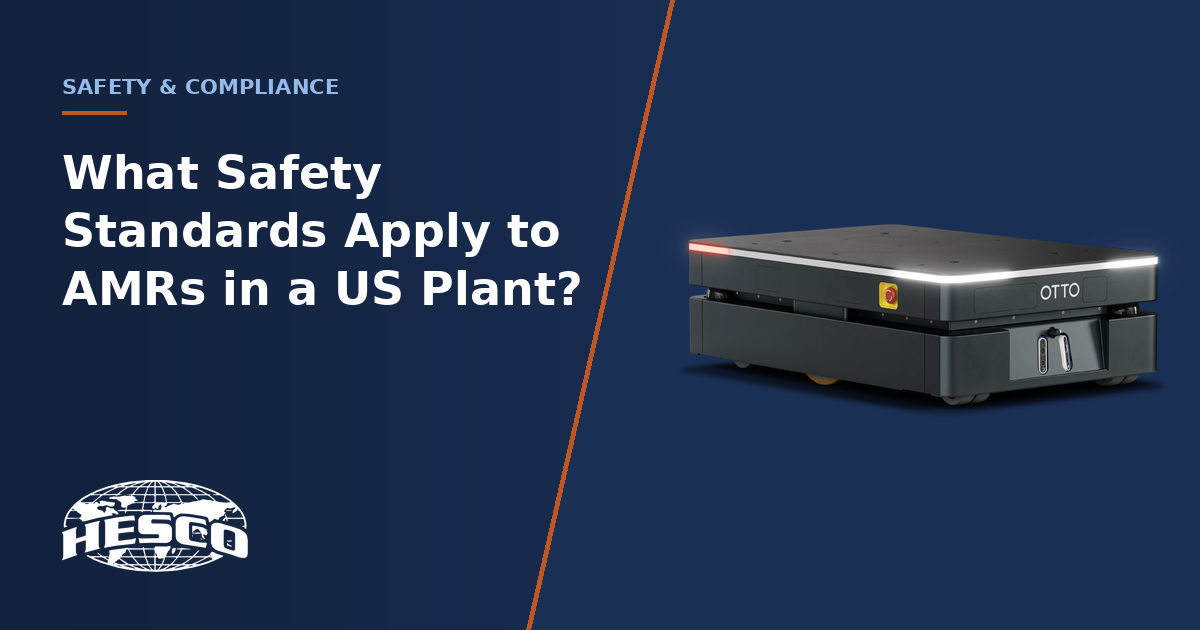
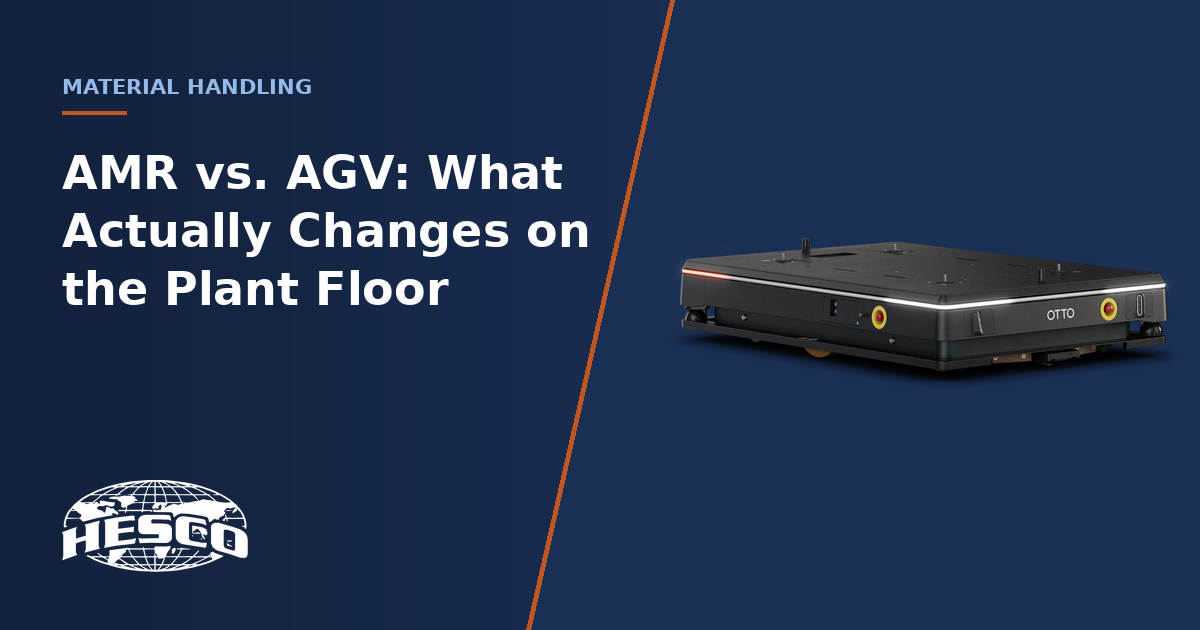
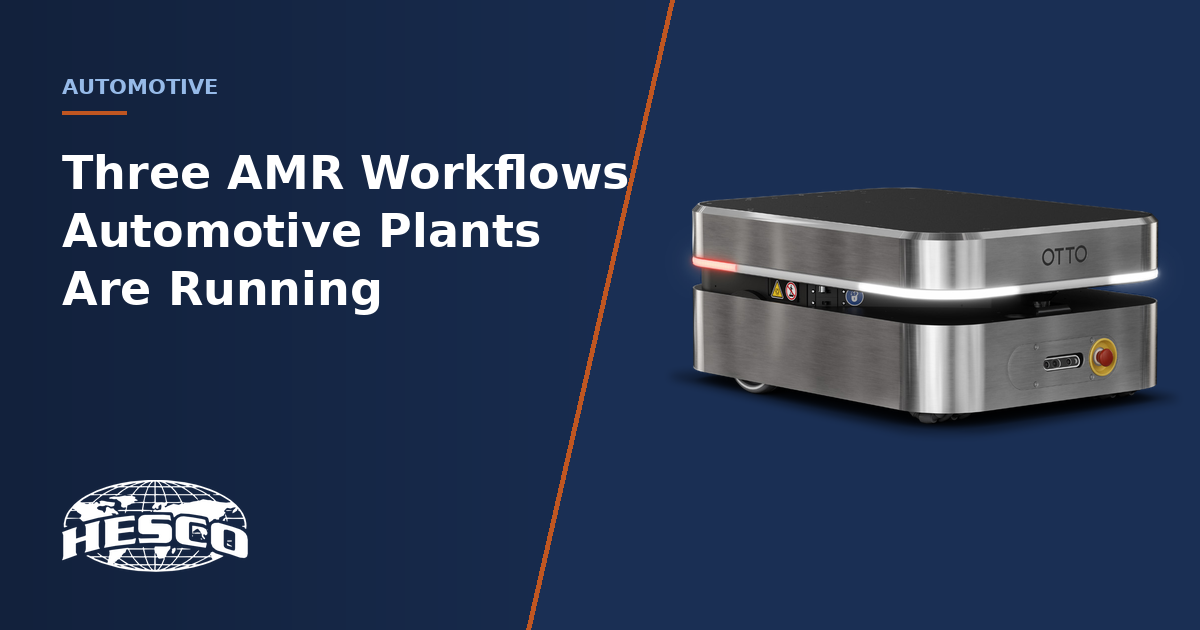
The plant replaced them with more than 160 OTTO 1500 AMRs carrying custom fixed-rack attachments, moving door panels to two final assembly lines 700 meters apart. Dispatch was integrated with FactoryTalk Optix, the deployment ran in multiple phases with no production disruption, and the plant recorded a 20% increase in production rate.
Two things worth pulling out. First, 160+ robots deployed in phases inside a running plant is a scheduling achievement as much as a technical one. Second, the attachment was custom fixed-rack tooling, not a standard conveyor or lift — door panels are awkward, and the payload dictated the attachment before anything else got specified.
Marketplace to main line: solving an aisle problem with the cart
At a second Fortune 500 OEM plant, operators were manually pushing parts carts from the marketplace to the line, repeatedly through the shift. The cost was threefold: labor diverted from value-added work, a ceiling on throughput, and pedestrian traffic sharing space with material movement.
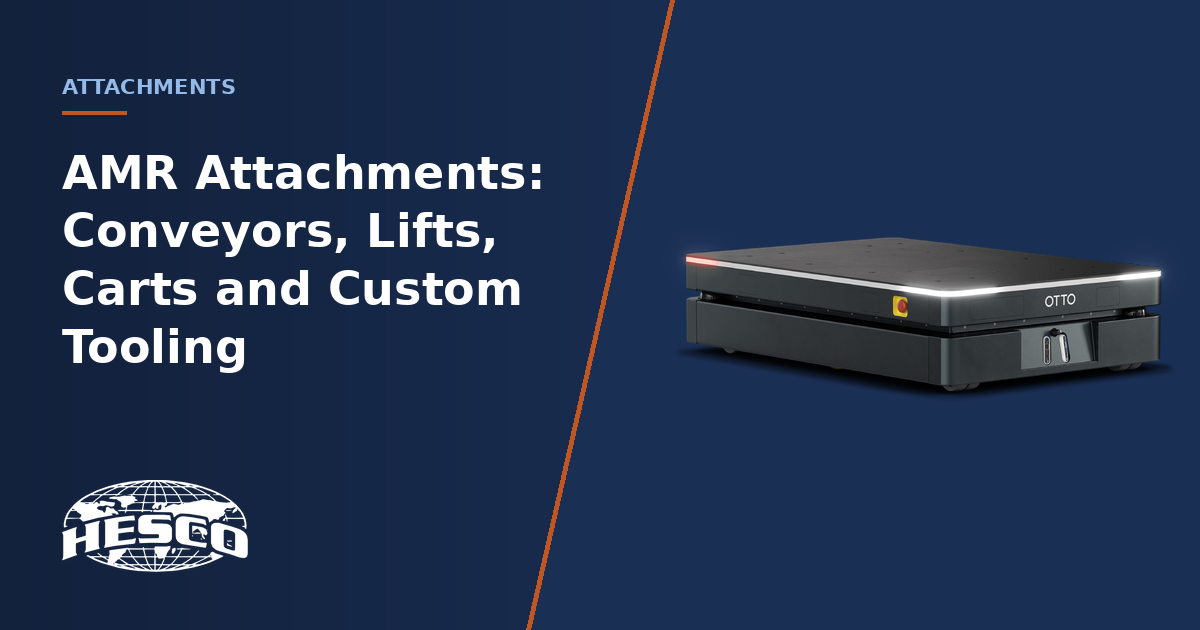
The plant deployed more than 100 OTTO 100 AMRs with custom 90° turntable carts, delivering over 100 unique parts across multiple lines.
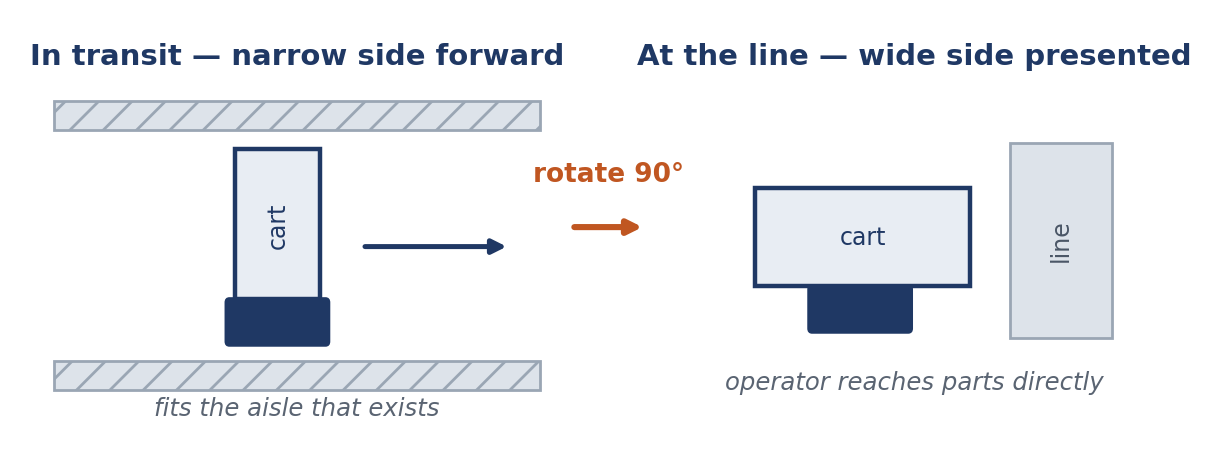
The turntable is a smart piece of engineering. The AMRs move carts oriented on their narrow side, which is what lets them work in the aisles that exist. At the line, the cart rotates to present its wide side, giving operators direct access. The plant reported a 39% improvement in takt time along with better safety and labor utilization.
The transferable lesson: when aisle width is the binding constraint, the answer isn't always a smaller robot. Sometimes it's tooling that changes the payload's footprint in transit.
Main line to outbound: designing against a 62-second cycle

The third case is a new high-speed powertrain line with a 62-second cycle time. Manual forklifts couldn't hold that pace consistently, and introduced safety exposure in areas shared with pedestrians.
The OEM deployed 11 OTTO 1500 AMRs with lift attachments, moving finished engines from the line to outbound staging while replenishing materials autonomously. Job sequencing was coordinated through FactoryTalk Optix. The deployment met its productivity targets and is now being standardized for rollout to another facility.
Why cycle time matters more than robot count: a fixed takt turns material handling into a hard real-time problem. Eleven robots is a small fleet, but the sizing has to guarantee a robot is present and ready every 62 seconds — accounting for travel, docking, transfer and charging. That's a dispatch and simulation question, not a payload question.
The common thread: dispatch is the integration
Two of these three name FactoryTalk Optix as the coordination layer. That's worth noticing, because it locates the hard part of the project. Moving a payload from A to B is the easy half. The difficult half is deciding which robot goes where and when, based on what the line is doing right now.
That requires the fleet to know production state, which means talking to the controls layer. OTTO AMRs communicate with existing PLCs over OPC-UA and connect to MES, ERP and WMS through open APIs, so dispatch logic runs on real conditions rather than a fixed schedule.
| Workflow | Fleet | Attachment | Reported result |
|---|---|---|---|
| Sub-assembly to main line | 160+ OTTO 1500 | Custom fixed-rack | 20% higher production rate |
| Marketplace to main line | 100+ OTTO 100 | Custom 90° turntable cart | 39% takt time improvement |
| Main line to outbound | 11 OTTO 1500 | Lift | Met targets on a 62-sec cycle |
What to take from these
- The attachment does the work. In every case the attachment was the engineering problem. Payload class narrowed the robot choice; the attachment determined whether the workflow was viable at all.
- Gains come from flow, not speed. A 20% production increase and a 39% takt improvement came from removing waiting and walking, not from moving faster.
- Phasing is part of the design. The 160-robot deployment ran in phases inside a live plant. For a large fleet, the phasing plan deserves as much scrutiny as the steady-state design.
It's also worth validating fleet size in simulation before committing — the 62-second case especially, where a fleet sized on averages rather than worst-case behavior will miss its takt.
The bottom line
None of these plants automated material handling because the robots were interesting. They did it because a fixed path couldn't reach a new line, because operators were walking miles a shift, or because a new takt time left no room for a forklift to be somewhere else. The workflow came first.
Working through a material handling problem in an automotive plant? The HESCO team can help you scope the workflow, size the fleet, and work through how it integrates with your existing controls and FactoryTalk architecture. Get in touch at hesconet.com/contact-us.
Topics: