.png?width=1200&height=630&name=doosan-h-series-featured-image%20(1).png)
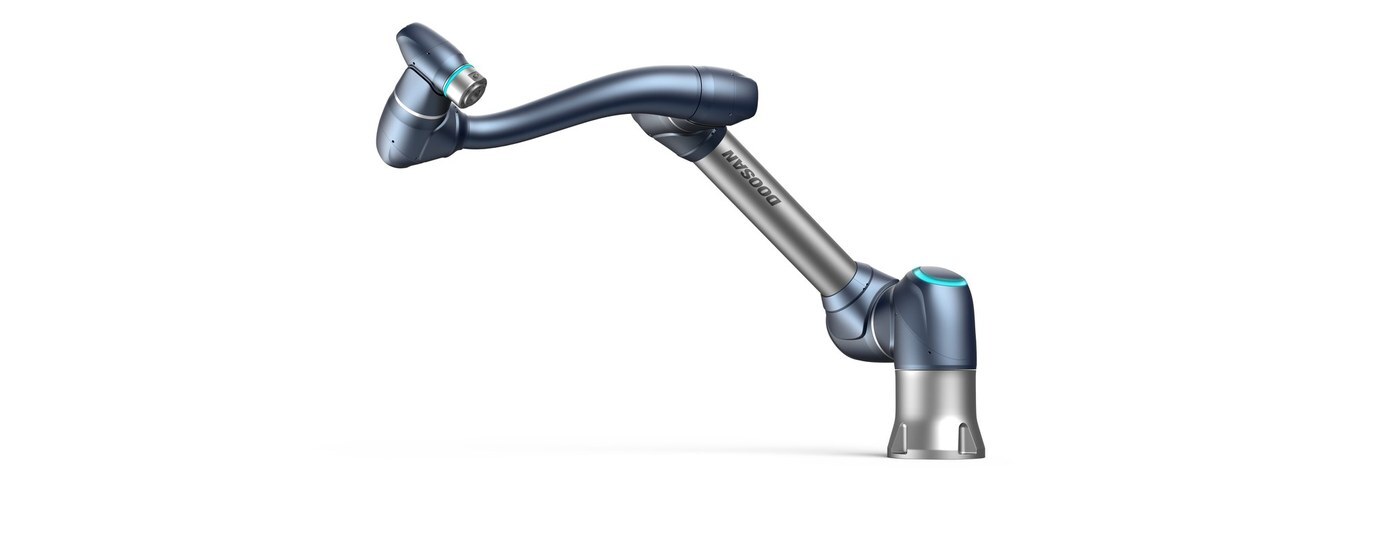
There's a clear point in a lot of automation projects where the lighter cobots run out of room. The part weighs more than 15 kg, or the arm needs to reach across a large fixture, or you're palletizing cases and assembling sizeable components that a compact arm simply can't handle. That's the threshold the Doosan H-Series is built for—and crossing it changes some of the assumptions you bring from the lighter end of the lineup.
The H-Series, branded "High-Powered," is the heavy-payload, long-reach family in the Doosan collaborative robot range: two six-axis arms rated for 20 and 25 kg that take on work the A- and M-Series can't. At HESCO, we steer customers toward the H-Series when the application is genuinely heavy or the work envelope is large enough that reach becomes the limiting factor. This article covers what the H-Series is designed to do, how the two models differ, and the implementation details—mounting in particular—that set it apart from the lighter arms.
What the H-Series Is Built For
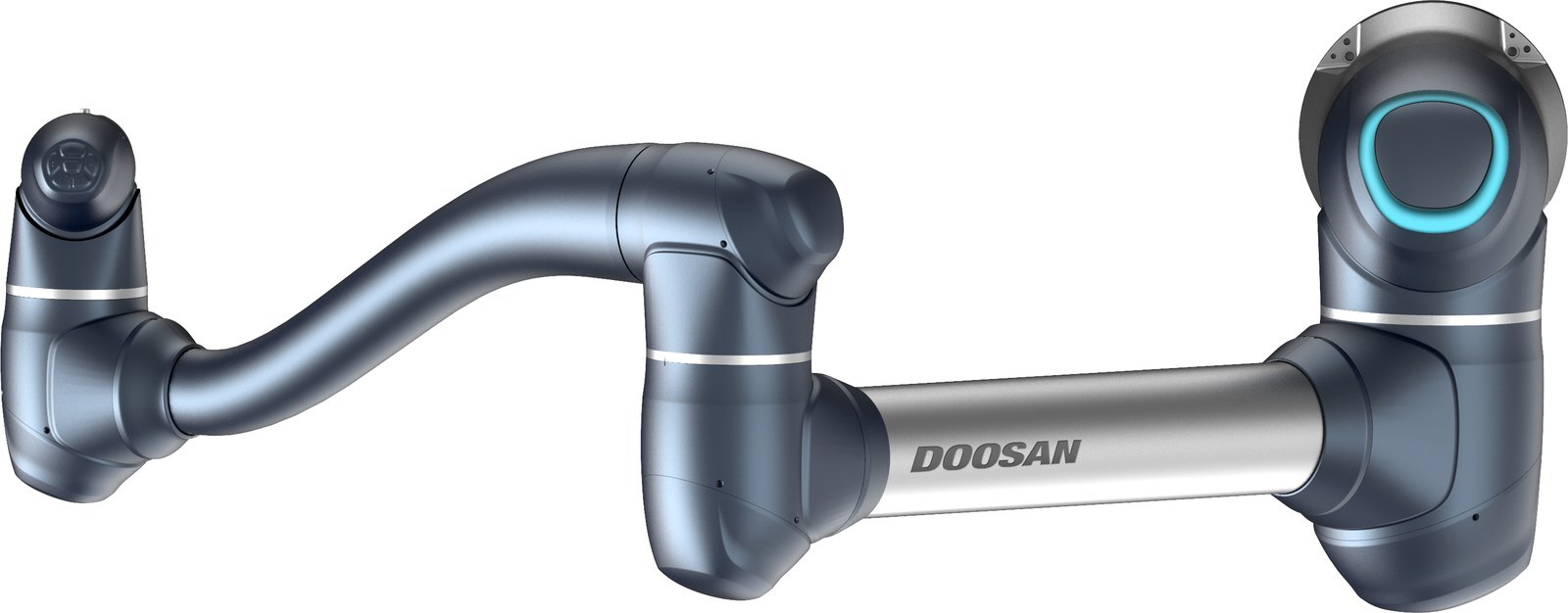
Doosan's application list for the H-Series tells the story: palletizing, machine tending, managing heavy objects, assembling heavy parts, assembling automotive bodies, inspection, welding, and film production. This is the family for serious lifting and large-envelope work—heavy machine tending, automotive assembly, and palletizing of weightier cases.
Two design realities define the series. First, payload and reach scale up substantially: 20–25 kg of payload and reaches of 1,500–1,700 mm. Second—and this is the key implementation difference from the rest of the lineup—the H-Series mounts to the floor only, not in any orientation. These are large arms (77–79 kg), and the floor-mount requirement shapes how you lay out the cell.
The Two Models
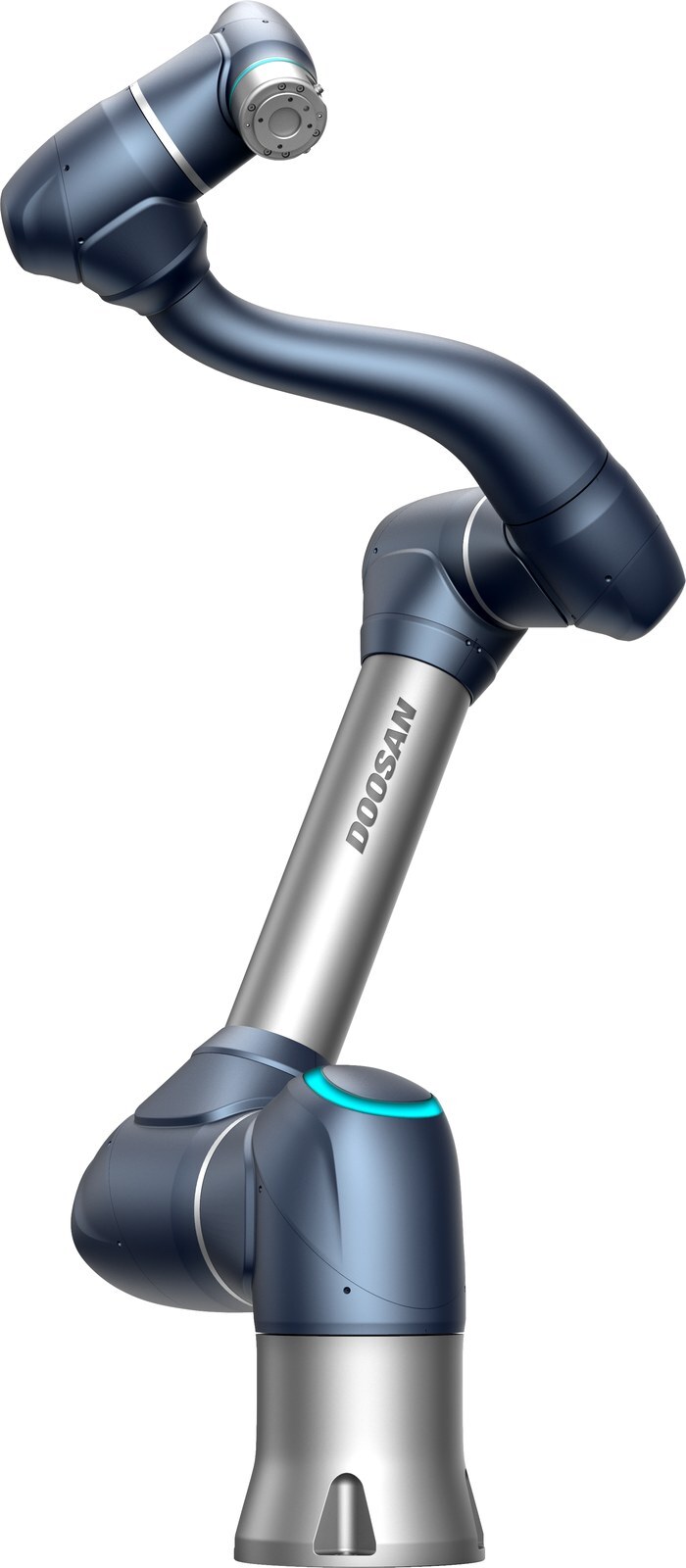
- H2017 — 20 kg payload, 1,700 mm reach, 79 kg weight, ±0.1 mm repeatability, 290 W
- H2515 — 25 kg payload, 1,500 mm reach, 77 kg weight, ±0.1 mm repeatability, 290 W
The choice between them is a clean reach-versus-payload decision. The H2017 gives you the longer 1,700 mm reach at 20 kg payload—pick it when the arm needs to cover a large area or reach deep into a machine. The H2515 adds 5 kg of payload (to 25 kg) in a slightly shorter 1,500 mm envelope—pick it when the parts are heavier and reach is less of a constraint. Both hold ±0.1 mm repeatability, which is the expected trade for moving this much mass and is still well within tolerance for palletizing, heavy assembly, and tending.
Two specs are worth pausing on. First, power consumption is just 290 W—lower than every lighter arm in the lineup, including the 370–440 W A- and M-Series models. That's a notable efficiency result for arms carrying this much payload and speaks to the drive design. Second, joint speeds are lower than the lighter series by design: J1 runs at 100°/s and J2 at 80°/s (versus 150–180°/s on the smaller arms), with the wrist joints at 180°/s. That's the physics of moving more mass safely—and a reason to validate cycle-time expectations against the actual motion profile rather than assuming the H-Series moves as quickly as an M-Series arm.
Where the H-Series Fits
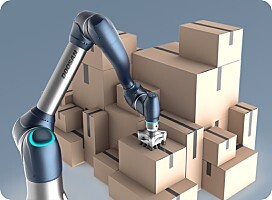
- Heavy palletizing and case handling. When cases or totes exceed what an M-Series arm can lift, the H2515's 25 kg payload handles them. (For dedicated high-stack palletizing specifically, the five-axis P-Series is purpose-built and reaches higher—worth comparing if palletizing is the whole job.)
- Machine tending with large parts. Loading and unloading heavier workpieces, or tending machines where the part itself is substantial, plays directly to the H-Series payload. The H2017's longer reach lets one arm service a larger machine or a wider cluster.
- Heavy assembly and automotive bodywork. Both are on Doosan's application list; the payload and reach suit fitting and positioning larger components.
- Welding over a large envelope. The 1,700 mm reach on the H2017 gives a welding torch substantial coverage from a single base position.
- Inspection and film production. The reach and stable, repeatable motion suit camera and sensor positioning over large areas—film production being a less obvious but listed application where smooth long-reach motion matters.
Implementation Notes
The H-Series shares the Doosan platform, but a few implementation factors differ meaningfully from the lighter arms.
Mounting is the big one. Unlike the A- and M-Series, the H-Series is floor-mount only. Combined with the 77–79 kg arm weight, that means the base structure and floor anchoring need to handle both the static load and the dynamic forces of a heavy arm moving payload at reach—factor this into cell layout and foundation early, not as an afterthought.
Connectivity is consistent with the rest of the lineup: EtherNet/IP, PROFINET, Modbus TCP, Modbus RTU, TCP/IP, and serial RS-232/RS-422/RS-485, so the arm ties into your existing PLC and fieldbus environment. Programming uses DART-Suite's drag-and-drop interface and the Teach Cockpit, with open-source Python support for scripted logic.
On safety, the H-Series carries the same PL e, Category 4 certification, six joint torque sensors with 0.2 N sensitivity, and a scanner-triggered collaborative zone. It's worth emphasizing that running a heavy, high-payload arm in a genuinely collaborative (unguarded) mode raises the stakes of the application risk assessment considerably—the energy involved when a 25 kg-rated arm moves a heavy load is not the same as a 5 kg arm, and the assessment needs to reflect the tooling, payload, and speed of your specific task. The platform's fast safe-response time and short braking distances help, but they don't replace a proper evaluation.
Planning points carry over from the rest of the lineup: IP54 rating (general indoor use, not washdown) and a 0–45 °C operating range.
The Bottom Line
The H-Series is where the Doosan lineup goes heavy: 20–25 kg payloads, reaches to 1,700 mm, and surprisingly low 290 W power draw, for palletizing, heavy machine tending, automotive assembly, and large-envelope work. The trade-offs versus the lighter arms are floor-only mounting, larger arm mass, and lower joint speeds—all expected consequences of the added capability.
If your application sits below the H-Series' weight class, the M-Series workhorse is likely the better fit; if it's specifically about palletizing to height, compare against the P-Series. Because all of them share the H-Series' control, safety, and connectivity architecture, you can run a mixed fleet on one integration approach. To work out whether the H2017's reach or the H2515's payload is right for your application—and what the mounting and cell layout would look like—the HESCO team can help. Reach out and let's work through it together.
Topics:
.png?width=1200&height=630&name=doosan-p3020-featured-image%20(1).png)