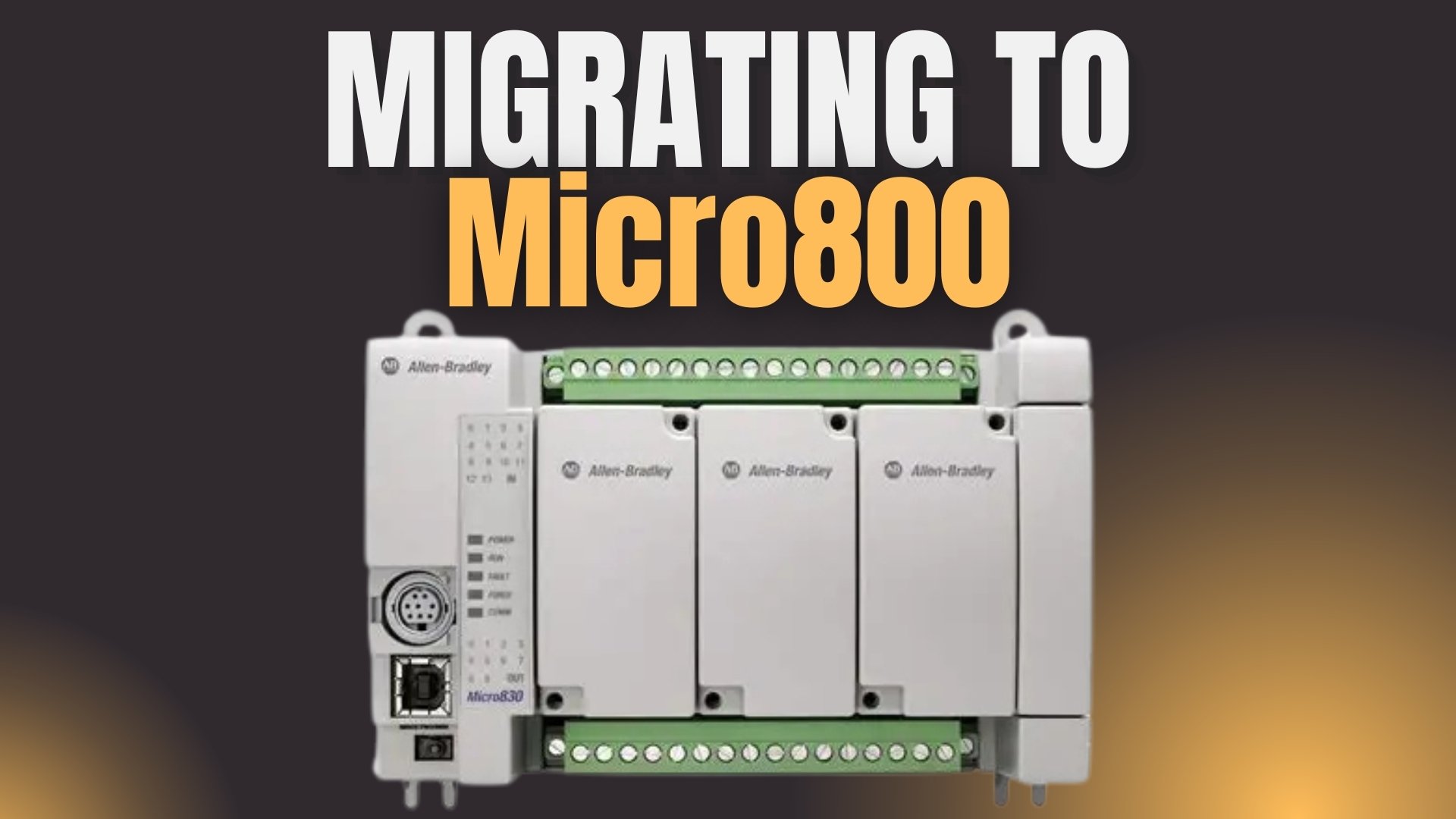
Standalone machine control sounds straightforward until you're staring down a panel design that has to balance I/O requirements, communication protocols, motion capability, and budget all at once. Choose a controller that's underpowered, and you'll be working around its limitations for the life of the machine. Choose one that's overbuilt, and you've spent money on capability you'll never use. For engineers and machine builders specifying PLCs for standalone applications, that middle ground can be surprisingly hard to find.
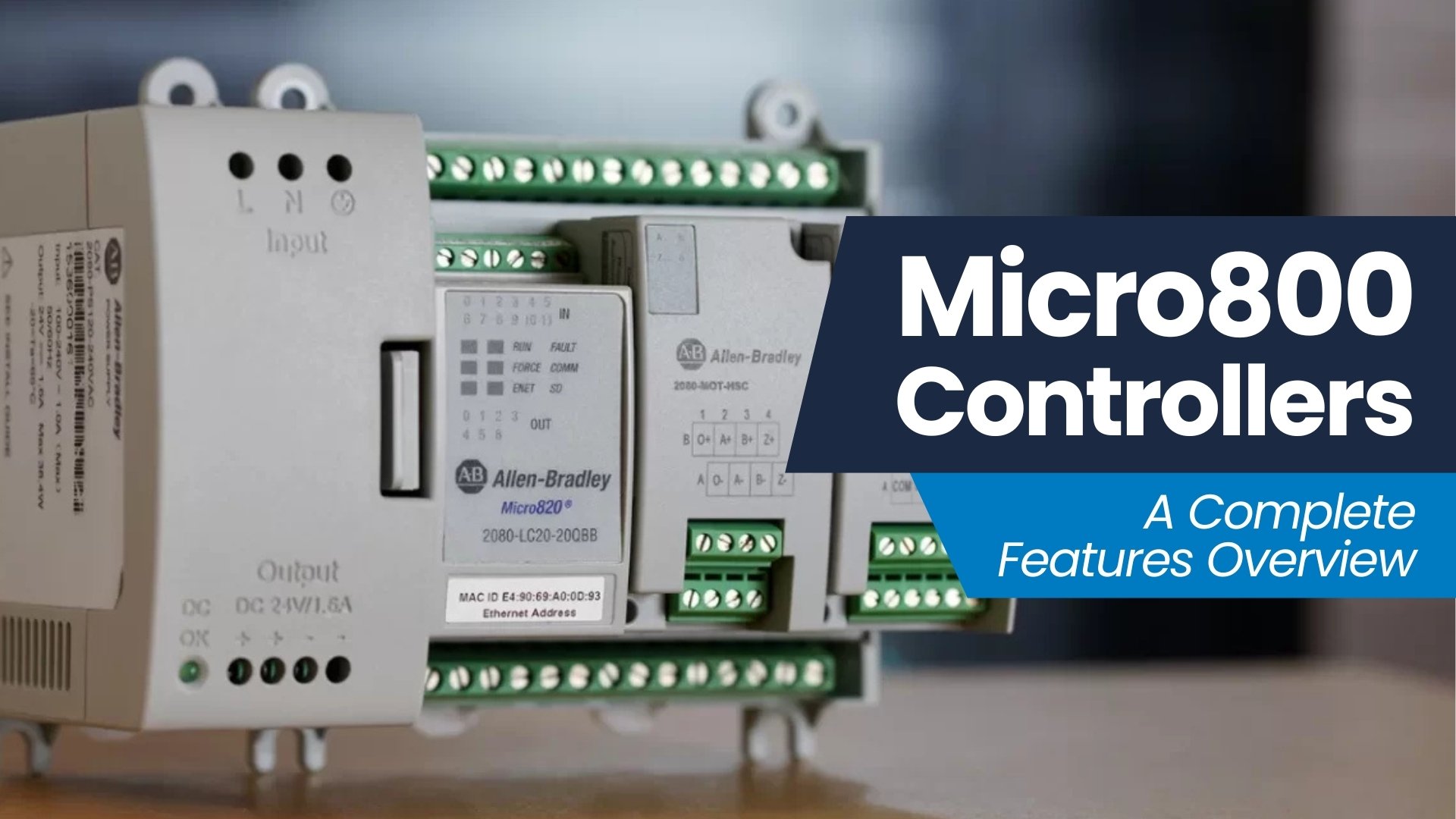
At HESCO, we work with Allen-Bradley automation products every day, and one product line we recommend for standalone machine control is the Micro800 series from Rockwell Automation. This article breaks down what the Micro800 platform is, how it's built, and what capabilities it brings to the table so you can walk into your next project with a clear picture of what this family offers before you start narrowing down which specific model fits your application.
Here's the short version: the Micro800 is a scalable, modular PLC family designed specifically for standalone machines. It comes in four controller tiers, supports a wide range of communication protocols, and uses a plug-in and expansion I/O architecture that lets you build out exactly the functionality you need without paying for what you don't. Both of Rockwell's primary programming environments support it, and the platform is designed for code reuse across machine models.
What the Micro800 Platform Is Built For
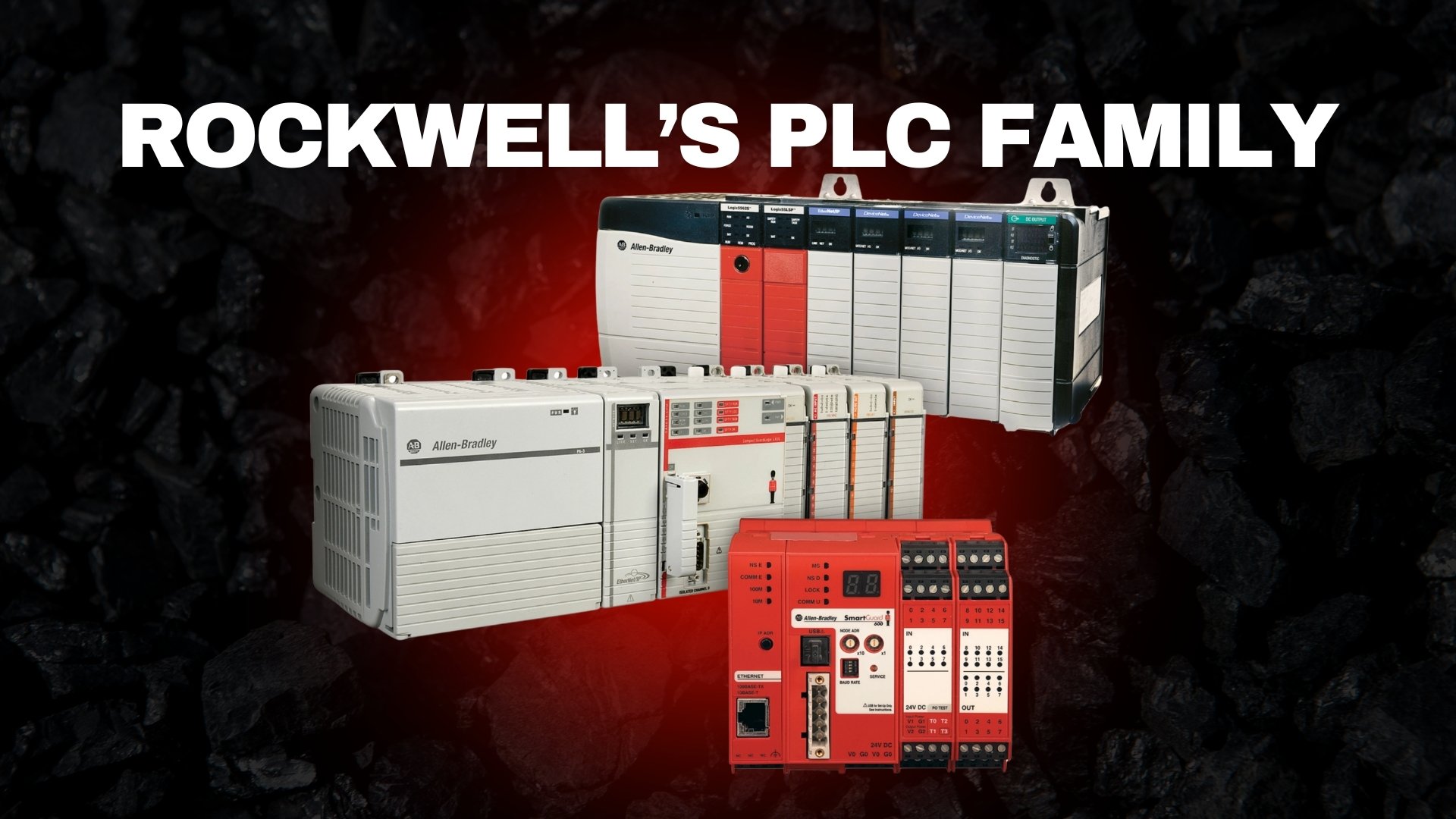
The Micro800 family is Allen-Bradley's answer to standalone machine control—applications where you need a capable, self-contained controller that doesn't require the overhead of a full ControlLogix or CompactLogix system. Think packaging equipment, material handling, pumping systems, food processing lines, HVAC and building management, and any machine that needs to operate independently or communicate with a broader network without being tightly integrated into a Logix-based architecture.
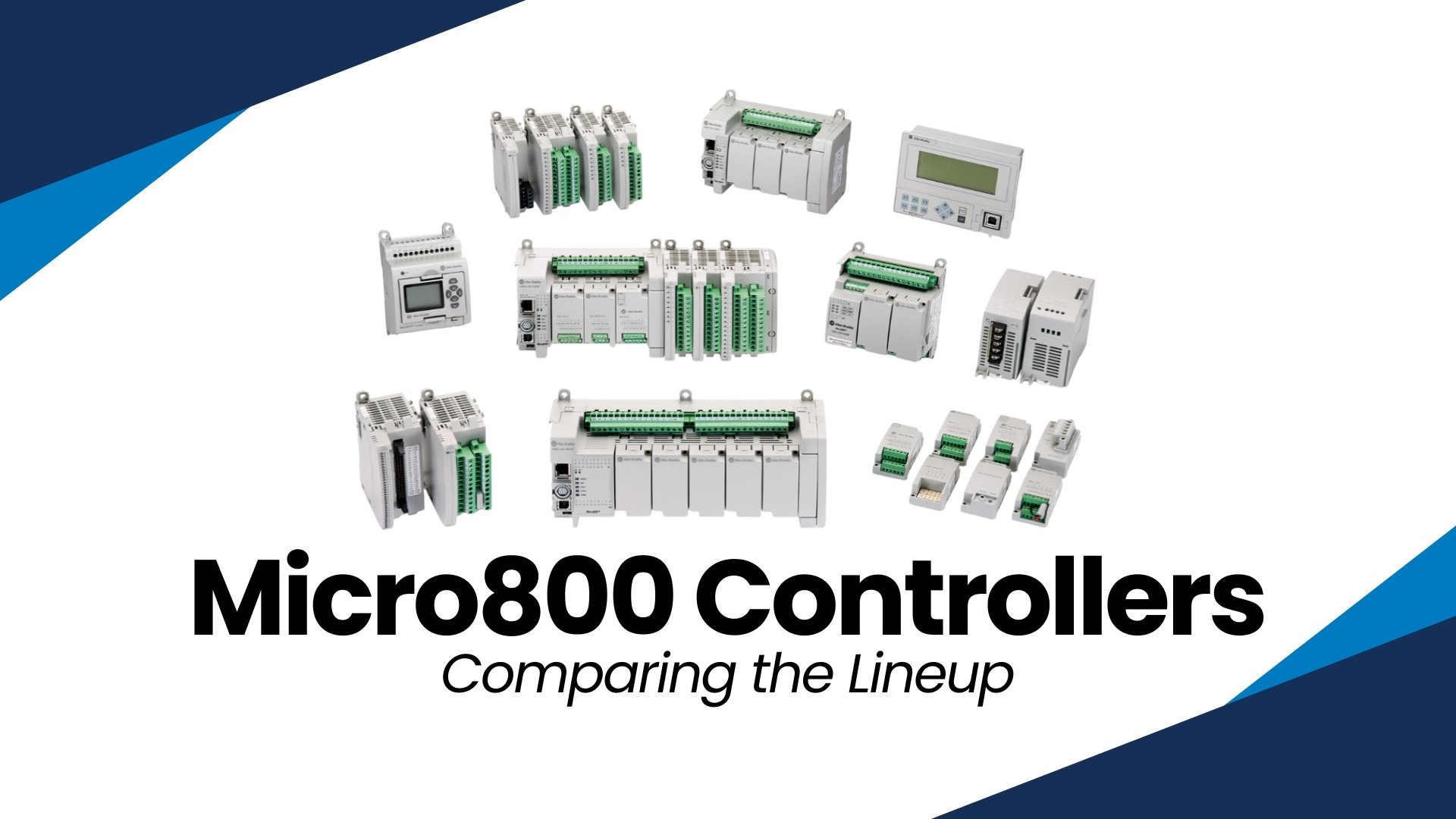
The platform spans four controller models: the Micro810, Micro820, Micro850, and Micro870, each optimized for a different range of applications and I/O requirements. A separate article covers how to choose between them in detail, but the key point here is that all four share a common programming environment, common plug-in modules, and common accessories. That consistency means your engineering team isn't starting from scratch every time the application changes.
A Modular Hardware Architecture
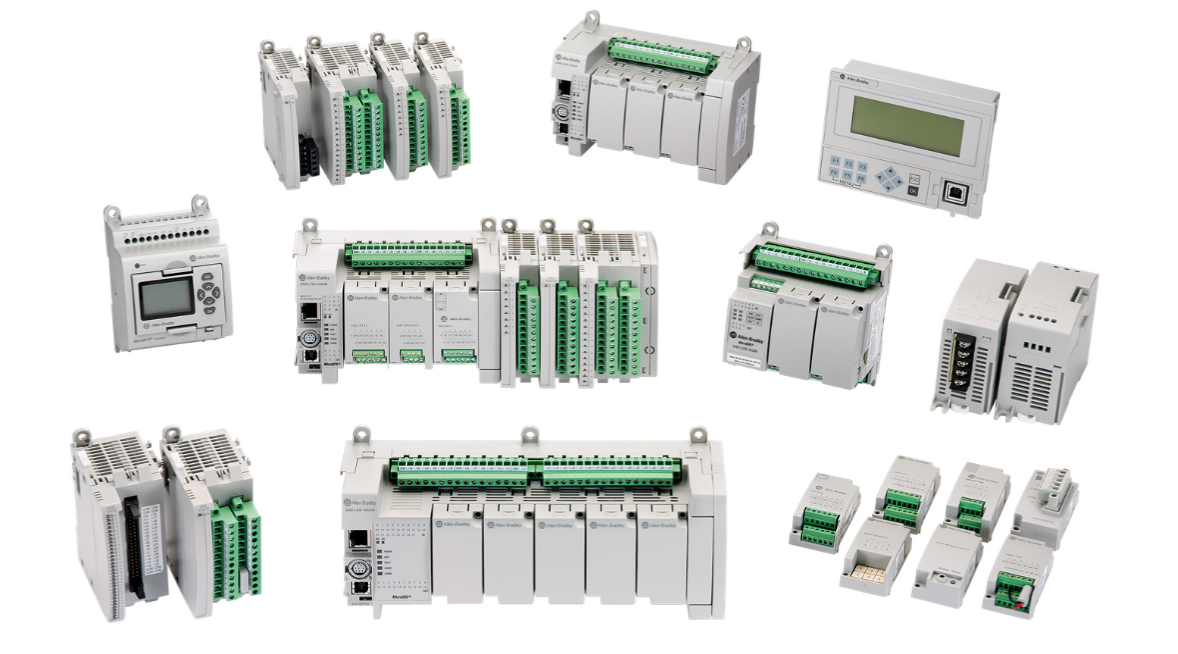
The defining design philosophy of the Micro800 line is modularity. Rather than buying a fixed-feature controller and accepting whatever it comes with, the platform is built around two expansion mechanisms:
- Plug-in modules slot directly into the base controller and extend its capabilities without increasing the overall footprint. Options include additional digital and analog I/O, isolated serial ports, RTD and thermocouple inputs, DeviceNet scanner capability, and motion high-speed counter modules. The practical result is that one base controller can be configured very differently across machine variants, keeping your BOM flexible.
- Expansion I/O modules (compatible with the Micro850 and Micro870) snap onto the right side of the base controller and scale the system's I/O count significantly. The Micro850 supports up to four expansion modules and 192 digital I/O points. The Micro870 takes that further with up to eight modules and 304 digital I/O points. These modules offer higher resolution than plug-ins (14-bit input vs. 12-bit), isolated analog inputs, and configurable filter times, making them the right choice when accuracy matters.
Both module types use removable terminal blocks, which matters more than it might seem; it dramatically reduces wiring time during installation and simplifies maintenance when a module needs to be swapped in the field.
Communication Options
The Micro800 family supports a broad set of protocols, which is one of the reasons it works well in both pure Allen-Bradley environments and mixed-vendor installations:
- EtherNet/IP is supported across the Micro820, Micro850, and Micro870, enabling integration with Rockwell HMIs, drives, and higher-level systems. The Lx0E controller variants add Class 1 implicit messaging—up to four nodes on the Micro820 L20E, and up to eight on the Micro850 and Micro870—with pre-defined tag support for PowerFlex 520 series and Kinetix 5100 drives that simplifies drive integration considerably.
- Modbus RTU and Modbus TCP are supported on the Micro820 and above, covering many third-party device integrations you'll encounter on the plant floor.
- CIP Serial and DF1 (including full-duplex, half-duplex, and radio modem modes on the Micro850 and Micro870) support legacy communication needs and peer-to-peer controller messaging.
- DNP3 is available exclusively on the Micro870, making it the right choice for applications that need to communicate with SCADA systems in water/wastewater, energy, or utility environments.
- PCCC support on the Micro850 L50E and Micro870 L70E is particularly useful for shops modernizing away from MicroLogix controllers, as it allows the new controller to communicate with existing HMI and SCADA systems without requiring a full reconfiguration.
Motion Capability
The Micro800 platform includes embedded motion capability via pulse train output (PTO) on the Micro850 and Micro870. The Micro850 supports up to three axes of motion, while the Micro870 supports up to two. Both use PLCopen-compliant motion instructions, which reduces the learning curve for engineers already familiar with Logix-based motion programming.
For applications that need encoder feedback or higher-precision position registration, the motion high-speed counter plug-in supports pulse frequencies up to 250 kHz and includes touch probe support for accurate position registration without external hardware.
Software and Programming
All Micro800 controllers are programmed using one of two software platforms:
- Connected Components Workbench (CCW) is the established environment for Micro800 programming. The Standard Edition is free to download and covers ladder diagram, function block, and structured text programming, built-in simulation via the Micro800 Simulator, HMI design for PanelView 800 terminals, and device configuration for PowerFlex drives and other component-class products, all in one package.
- FactoryTalk Design Workbench is Rockwell's newer 64-bit programming platform for the Micro800 line, designed for shops already working in the FactoryTalk ecosystem. It offers a familiar workflow for Studio 5000 users and supports importing CCW version 22 and 23 projects with minimal conversion risk.
Both environments support Logix Theme programming, which allows engineers to work in familiar Logix-style instruction naming and copy ladder logic directly between CCW and Studio 5000 Logix Designer, a practical time-saver on projects that involve both controller platforms.
The Bottom Line
The Micro800 is a well-thought-out platform for standalone machine control—modular enough to avoid over-specifying, capable enough to handle real applications, and consistent enough across the family to support code reuse and standardization. For teams that live in the Allen-Bradley ecosystem, it fits cleanly alongside existing Logix infrastructure. For mixed-vendor environments, its protocol flexibility makes integration manageable.
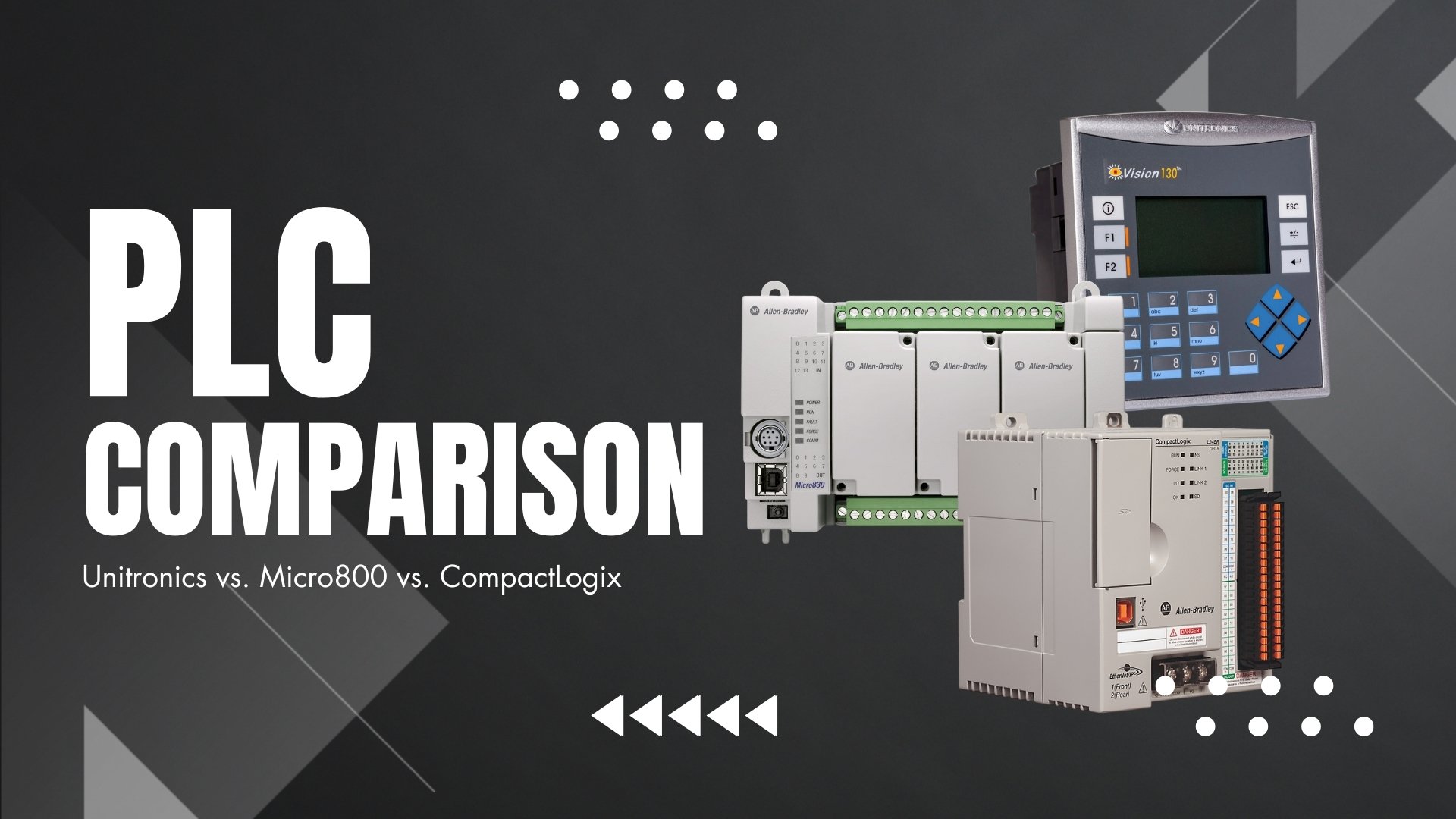
If you're evaluating the Micro800 for an upcoming project or want to understand which model and configuration fits your specific application, the HESCO team is ready to help. Contact us today to talk through your requirements with an automation specialist who knows this product line inside and out. Or check out this article comparing the four models of the Micro800 series.
Topics: