
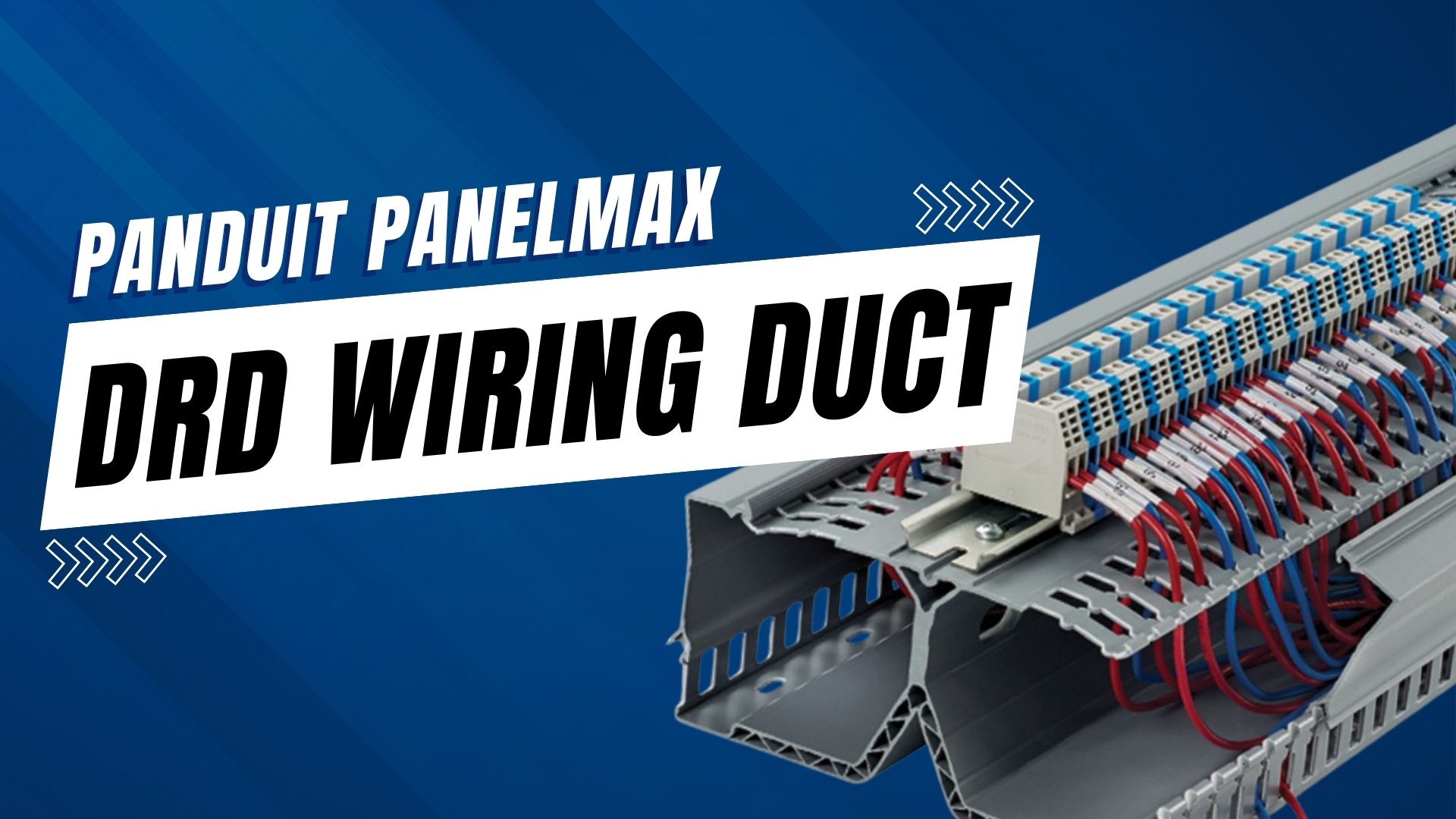
Panel real estate is a constant battle. As component counts rise and enclosures stay the same size, engineers face a familiar compromise: run wires beside the DIN rail and sacrifice mounting space, or crowd components together and make future maintenance a headache. Neither option is good, and both cost time and money; not to mention that loose, uncontained wires can make otherwise quality panels look sloppy. Conventional wiring duct layouts haven't fundamentally changed in decades, and on complex builds, the inefficiencies add up fast.
HESCO is proud to partner with Panduit to bring the PanelMax Type DRD (Din Rail Duct) Wiring Duct to industrial panel builders who are done accepting those tradeoffs. The DRD system flips the conventional layout on its head—mounting DIN rail directly on top of the duct rather than beside it—and the results speak for themselves. In this article, we’ll break down how the system works, what the specs mean in practice, and why this product is worth a serious look for your next panel build.
Short on time? Here’s what matters: the DRD mounts DIN rail on top of the duct instead of beside it, recovering up to 30% of panel space. Pass-through holes shorten wiring paths, cutting install time by up to 50%. Material costs drop by up to 25% due to fewer duct runs and shorter wire lengths. It’s rated for general-purpose indoor use up to 50°C, made from UL 94 V-0 lead-free PVC, and comes in 6-foot lengths. If you build dense panels and feel the squeeze, this system is worth your attention.
How the DRD System Works
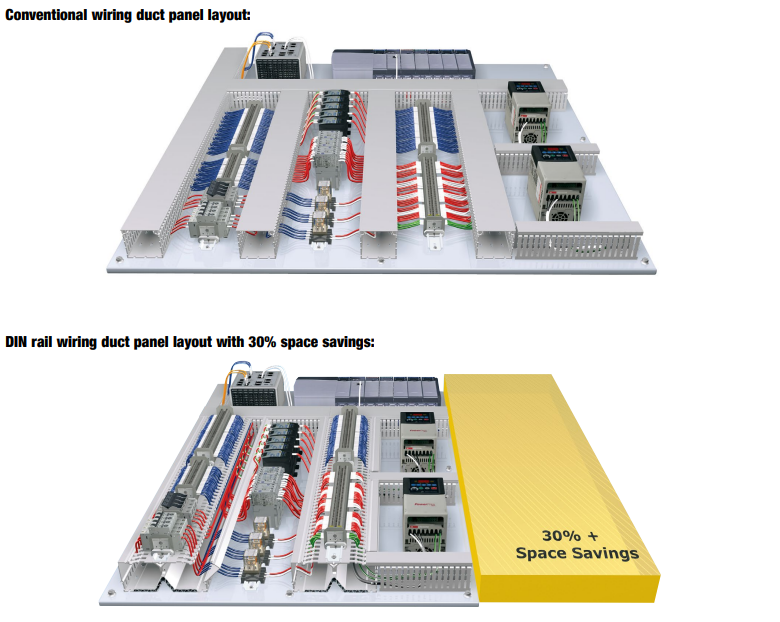
Traditional wiring duct runs parallel to DIN rail—one strip of duct, one strip of rail, back and forth across the panel backplate. It works, but it eats up space. The PanelMax DRD takes a fundamentally different approach: the wiring duct acts as a raised platform, and the DIN rail mounts directly on top of it. Components sit elevated above the panel surface, and the duct beneath captures and routes the wiring.
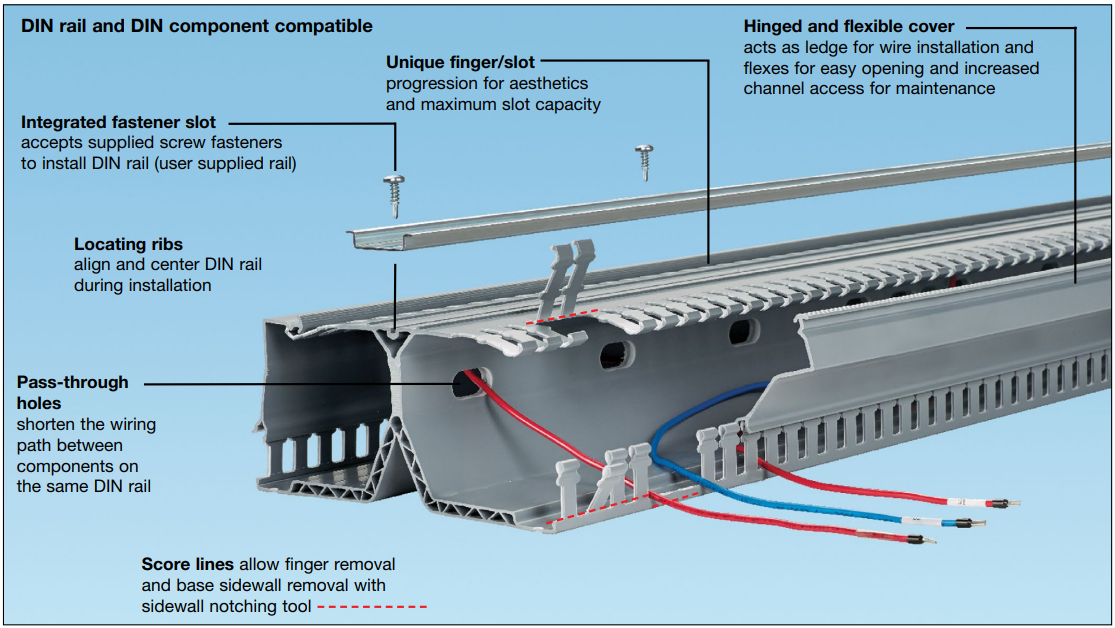
The dual-channel design gives you organized wire routing on both sides of the DIN rail in a single footprint. Pass-through holes built into the duct wall shorten the wiring path between components on the same rail; less wire travel means cleaner builds and faster terminations. The result is a more compact, accessible layout without sacrificing any capacity.
Key Features Worth Knowing
Here's what sets the DRD apart from conventional wiring duct systems:
- DIN rail mounts on top of the duct, not beside it: This single design change is what enables space savings. By stacking the rail-and-duct assembly vertically, you free up horizontal panel width that a parallel duct run would otherwise consume.
- Integrated pass-through holes cut wire travel: Instead of routing wires out of the duct, across the panel, and back in, pass-throughs let you take a direct path between components on the same rail. On a complex build with dozens of terminations, this adds up to a meaningful reduction in wire length and labor time.
- Score lines and removable sidewalls simplify customization: Fingers and base sidewalls can be removed without special tools, letting you adapt the duct layout to your specific component arrangement in the field. No cutting, no grinding, just snap and go.
- Locating ribs align the DIN rail automatically: Integrated ribs center the rail during installation, reducing the chance of misalignment and speeding up the assembly process. Combined with the integrated fastener slot and supplied screw fasteners, the rail goes down straight and stays there.
- Components are elevated for easier access: Raising components off the panel surface isn't just about clearance. It also makes wiring terminations more accessible, especially in tight enclosures. Maintenance techs will notice the difference immediately.
By the Numbers
Panduit backs up the PanelMax DRD with documented performance figures. These reflect real-world panel builds using the system in place of conventional side-by-side layouts:
- Up to 30% panel space savings. That's significant on any build, but especially on retrofit projects where you're working within a fixed enclosure footprint.
- Up to 25% material cost savings. Fewer duct runs, shorter wire lengths, and a more efficient layout translate directly into lower BOM costs per panel.
- Up to 50% faster installation. This is the number that tends to get attention. Half the install time per panel, at scale, represents a substantial labor cost reduction, particularly for panel shops running high volumes.
Specifications in Context
The DRD system is designed for standard industrial enclosure environments. Here's what the core specs look like and why they matter:
- Material: Lead-free PVC. A general-purpose indoor material with a UL 94 V-0 flame rating. Appropriate for most control panel environments without requiring specialty materials or added cost.
- Continuous-use temperature: up to 50°C (122°F). UL recognized rating for sustained operating temperature. Adequate for most industrial enclosure conditions, though high-heat environments warrant verification against your specific thermal profile.
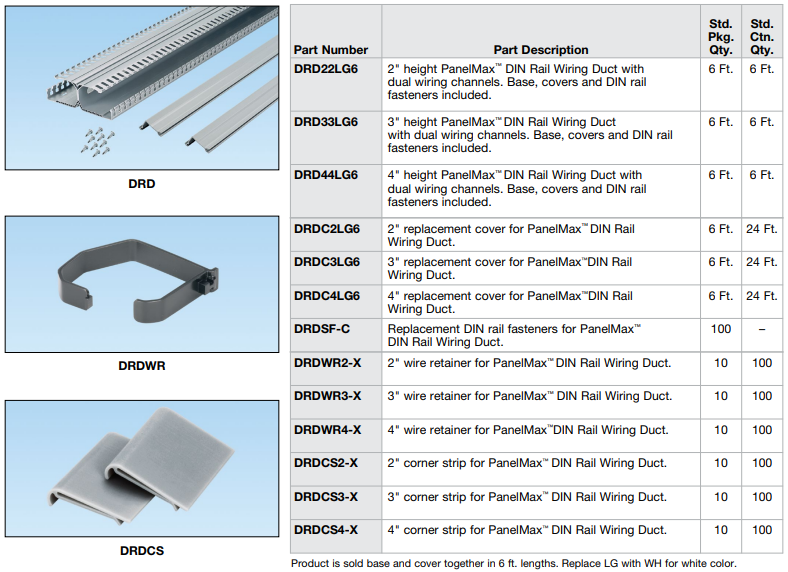
- Available in 6-foot lengths. Standard length works well for most panel backplate configurations. The DRD22LG6 variant measures 2.12" (54mm) x 6.22" (158mm) in cross-section, compatible with standard DIN rail and common component footprints.
- Maximum component weight: 4 lbs. per foot. This is a compatibility limit for DIN-mounted components, not a structural rating for the duct itself. Keep it in mind when spec’ing heavier components like larger circuit breakers or dense I/O modules; if your weight load approaches or exceeds this threshold, verify compatibility before committing to a layout.
Right Application, Right Product
The PanelMax DRD makes the most sense in a few specific scenarios. If you're building panels with high component density—terminal blocks, relays, fuse blocks, circuit breakers, small PLC I/O modules—and running into space constraints, the DRD layout gives you room to breathe without upsizing the enclosure. It's also a strong fit for panel shops focused on standardizing builds and reducing labor hours across high-volume production.
Retrofit projects are another compelling use case. When you need to add capacity to an existing enclosure without physically replacing it, reclaiming 30% of usable panel space can make the difference between a clean upgrade and a costly enclosure swap.
The DRD might not be the right call in every application; specifically, high-heat environments near or above the 50°C threshold, outdoor or wet location applications (it's rated for indoor use), or projects where existing panel layouts and infrastructure make a full re-layout impractical.
The Main Takeaway
The Panduit PanelMax DRD is a rethought approach to panel layout that delivers real, measurable gains in space, cost, and installation time.
For engineers and panel builders dealing with density challenges or looking to tighten up their build process, it's worth a serious evaluation. The product is available through HESCO, and our team can help you assess whether it fits your specific application and layout requirements.
Ready to see how PanelMax DRD fits your next project? Contact the HESCO team today. We'll help you evaluate the layout, confirm compatibility, and get you what you need to move forward.
For more information about the PanelMax DRD Wiring Duct, check out Panduit’s full breakdown here.
